
Elastic wheels, buffers and protection parts.
Protection and damping
Damping and high-elastic rubber for repeated-load and rolling use.
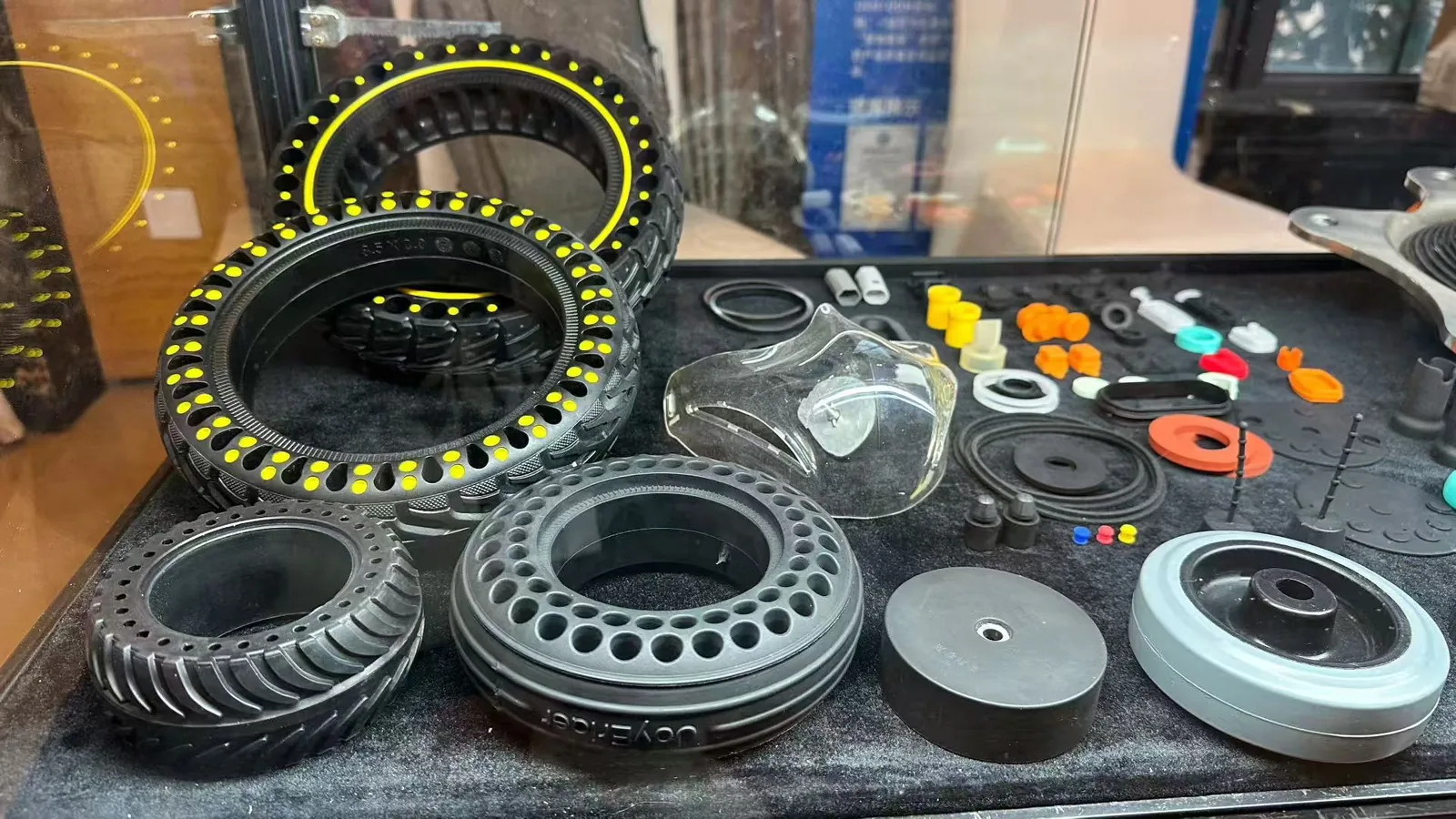
PRESIS develops elastic wheels, buffers and protection parts for robotic systems, cleaning equipment and other applications where repeated movement and impact matter.
Buyer pain points
Damping parts must keep both elasticity and durability over many cycles.
- Wear and rebound change with load, rolling speed and floor condition.
- Noise, vibration and shock absorption are often the real customer concern.
- Size, hardness and bond stability affect the fit with hardware systems.
- Repeated-load parts need predictable performance and process control.
PRESIS solution
High-elastic rubber route
We review the use case, then align compound selection, shape and process to the real working cycle.
For robotic wheels and damping parts, the goal is stable rebound and controlled wear rather than a one-time sample success.
Material and process
High-elastic rubber performance depends on rebound, wear and load path.
| Project need | Recommended route | Buyer questions to prepare |
|---|---|---|
| Rubber wheel | NR / BR or custom high-elastic compound for rebound and rolling behavior. | Load, speed, floor surface, wear target and mounting method. |
| Damping buffer | Elastic compound tuned for compression, rebound and vibration isolation. | Impact direction, cycle count, operating temperature and stiffness target. |
| Protection part | Rubber with abrasion and aging balance for repeated handling or movement. | Usage scenario, contact surfaces, life target and appearance grade. |
Common buyer terms
Typical project keywords for this application
Damping rubber, high elastic rubber, rubber wheels, vibration isolation parts, protection buffers, repeated-load elastomer parts and custom rubber wheel development.
RFQ and follow-up
Share load, speed and surface conditions for the right compound route.
Include the working environment, rebound expectation, wear target and annual demand so engineering can map the right material and shape.