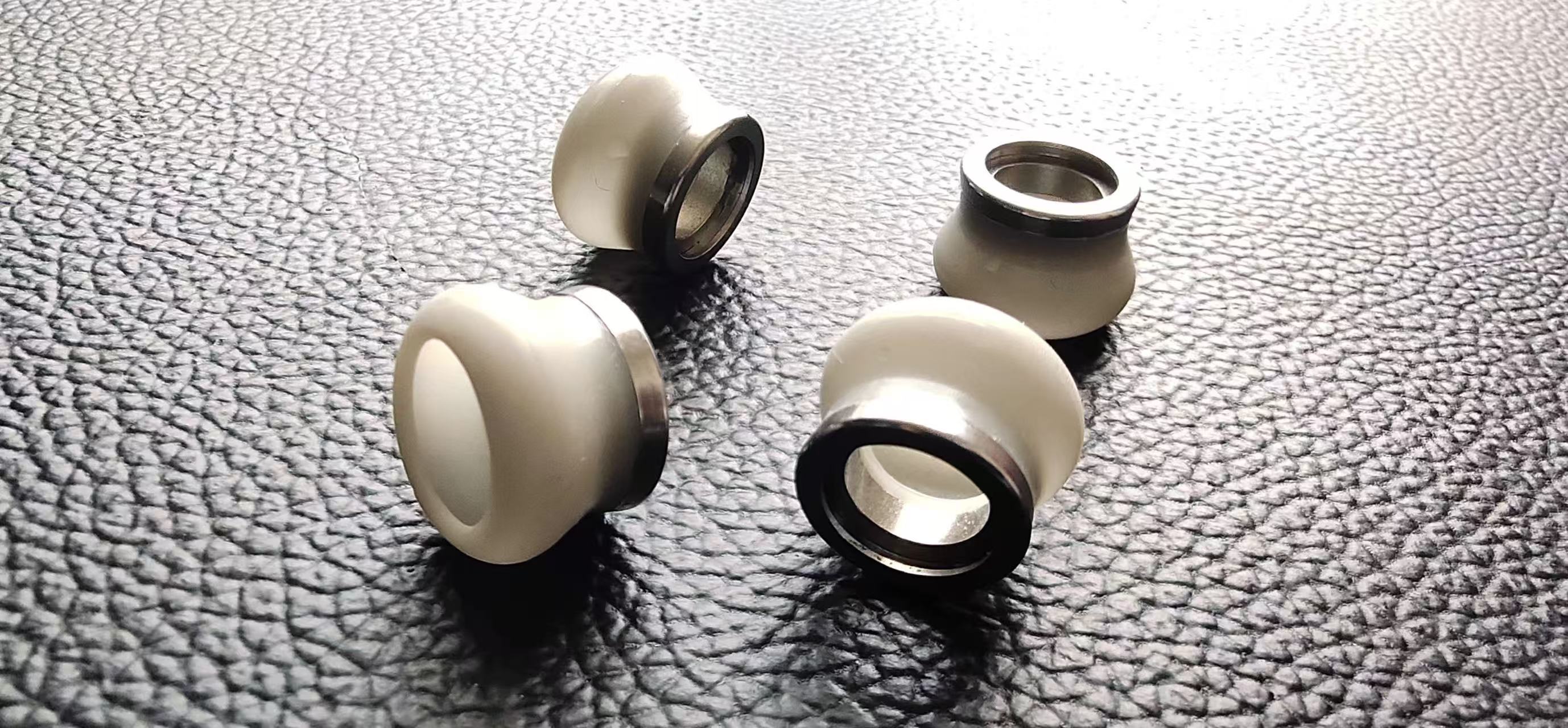
316L stainless-steel insert with LSR overmolding.
Medical-device component development case
316L stainless-steel overmolded LSR nasal plug: from requirements to controlled batch production.
From an engineer's perspective, the project was not simply a molding task. It required the customer inputs, 316L insert, medical-application liquid silicone rubber, tooling, sample approval and production records to be controlled as one connected route.
Engineering starting point
Translate the customer's application requirements into measurable engineering inputs.
- Clarify intended use, contact conditions and the customer's validation responsibilities before fixing the process route.
- Confirm critical dimensions, silicone hardness and color, appearance, bonding, cleanliness, annual volume, packaging and acceptance criteria.
- Use DFM to review insert positioning, silicone wall thickness, gating, venting, parting line, flash, demolding and tolerance allocation.
- Record the approved inputs and traceability requirements before sample tooling begins.
ISO 13485 certification and project controls
Turn medical-device quality requirements into documented manufacturing controls.
This project was organized around the customer's medical-device quality requirements and applied the documented, risk-based, supplier-control, traceability, change-control, nonconforming-output and inspection-record principles emphasized by ISO 13485.
PRESIS's Shenzhen legal entity holds ISO 13485:2016 certification for the production of silicone rubber components for medical devices.
Certificate No. 18726QD00910R053. Issued: 10 September 2026. Stated expiry: 9 September 2029. Continued validity is subject to surveillance and certification status.
Company certification is separate from the validation of this specific project. The certificate does not retrospectively qualify earlier batches; material suitability, testing and customer acceptance remain project-specific.
This quality management system certificate applies only to the named Shenzhen entity, site and production scope. It does not certify every PRESIS company or product, or establish product registration, biocompatibility, sterilization suitability or clinical performance.
Material and insert route
Confirm 316L and medical-application LSR before locking the process.
| Stage | Engineering confirmation | Controlled evidence |
|---|---|---|
| 316L material confirmation | Material specification, batch identity, surface condition and cleanliness requirements. | Supplier material documents, incoming inspection and batch traceability. |
| Stainless-steel machining | Datums, tolerances, burr removal, edge condition, surface finish and cleaning. | Machining inspection records and insert release status. |
| Medical-application LSR confirmation | Supplier grade, hardness, color, cure, post-cure and project-specific compatibility inputs. | Material documents, supplier batch records, customer approval and project validation evidence. |
| Interface and overmolding route | Insert preparation, positioning fixture, mechanical or bonding strategy and molding window. | Approved process, first-article results, dimensional inspection and interface checks. |
Engineer-led project path
Eight controlled stages from requirement review to batch release.
| Stage | Engineering work | Release condition |
|---|---|---|
| 1. Customer requirement review | Confirm function, interfaces, dimensions, contact conditions, volume and acceptance requirements. | Inputs and responsibilities are recorded. |
| 2. DFM review | Evaluate overmolding geometry, insert location, gate, venting, parting, flash and demolding risk. | Customer and engineering agree on the manufacturable route. |
| 3. 316L confirmation and machining | Verify material documents, machine critical features, remove burrs, clean and inspect inserts. | Released inserts are identified by batch. |
| 4. LSR selection confirmation | Review the medical-application LSR direction, processing needs and required customer documents. | The selected material route is approved for project trials. |
| 5. Process planning | Define insert preparation, fixture, mold concept, molding parameters, inspection and traceability. | The sample plan and control points are approved. |
| 6. Sample tooling and trials | Build the sample tool, mold trial parts, inspect results and close identified issues. | Sample results and open items are documented. |
| 7. Customer sample sign-off | Submit samples and agreed records for customer evaluation and confirmation. | Customer sign-off authorizes the mass-tool phase. |
| 8. Mass tooling and batch production | Manufacture the production mold, confirm the process window, complete first article, in-process and final inspection, then release identified batches. | Qualified parts are supplied under the approved process and acceptance criteria. |
Batch quality controls
Keep the approved sample route connected to every production batch.
- Controlled drawings, material specifications, process documents and inspection instructions.
- Supplier, 316L insert, LSR and finished-batch traceability.
- First-article, in-process and final inspection records against agreed criteria.
- Abnormal isolation, nonconforming-output control and corrective-action records.
- Customer confirmation before approved material, tooling or process changes.
- Packaging, labeling and release records defined by the project agreement.
Why the sample sign-off gate matters
The signed sample is the bridge between development and batch manufacturing. Production tooling and process control must carry forward the approved structure, material route, appearance and acceptance basis rather than treating approval as a separate event.
Compliance and disclosure boundary
This case documents a manufacturing-development route. Product registration, clinical performance, biocompatibility, sterilization suitability and final regulatory compliance are not claimed here; they remain subject to the applicable material records, customer specification and project validation.
RFQ and engineering follow-up
Send the drawing, application conditions and approval requirements for a focused DFM review.
Include intended use, contact conditions, critical dimensions, 316L specification, LSR requirements, expected volume, documentation needs and target schedule.