Project background
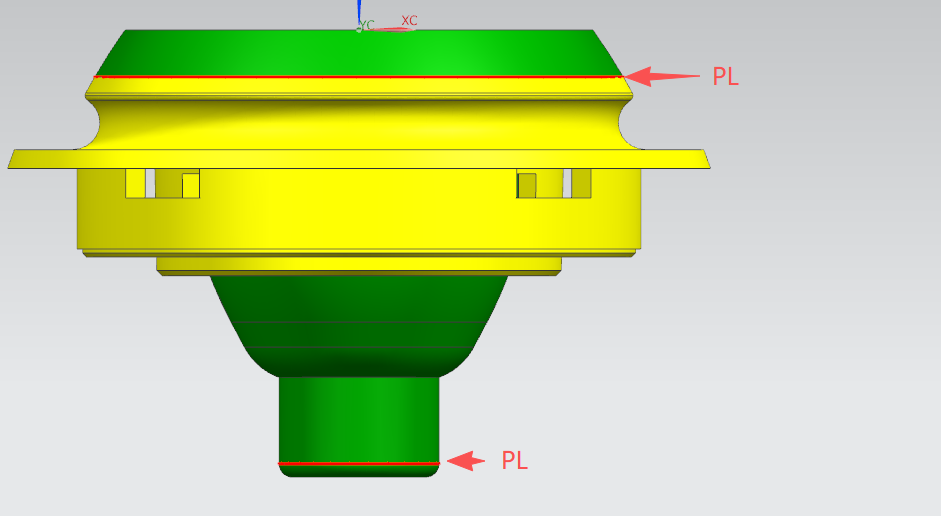
The referenced project model was rikka_lite_all_assy. The part size was 19.68 x 16.66 mm, using a 30-degree matte LSR surface and a single-part weight of about 1 g. The design combined a rigid PC skeleton with an outer LSR layer in a compact ring-like geometry.
For this type of micro composite part, the engineering focus was not only whether silicone could adhere to PC, but whether the structure could stay stable through insert positioning, cavity filling, demolding and repeated production without edge damage, delamination or mold sticking.
Engineering challenge
LSR was bonded directly to the PC insert during heat-vulcanization inside the mold. The project brief states that no primer, glue or plasma pretreatment was used, so the success of the route depended more heavily on insert control, mold structure, venting, demolding logic and material-process matching.
- Micro ring geometry: the part had limited structure space, so side-wall drag, trapped corners and local stress concentration directly affected demolding and edge quality.
- Bonding without pretreatment: once primer and plasma were removed from the process, consistency had to come from mold control and process stability rather than downstream correction.
- Appearance plus handling: the part still needed a matte integrated look, stable soft-hard transition and no visible separation after repeated use.
- Output stability: the route had to move beyond single-sample feasibility and hold through multi-cavity production.
DFM and tooling route
The mold route used a three-plate, upright, four-cavity hot-press tool in S136H tool steel with a stated design life of 100,000 cycles. The DFM handling in this case centered on making the bonding route manufacturable at micro scale rather than only theoretically bondable.
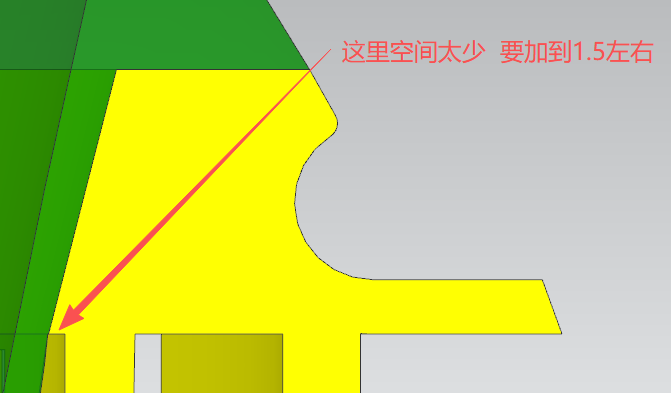
- 1.5 mm side-wall clearance was reserved to reduce scraping risk during release.
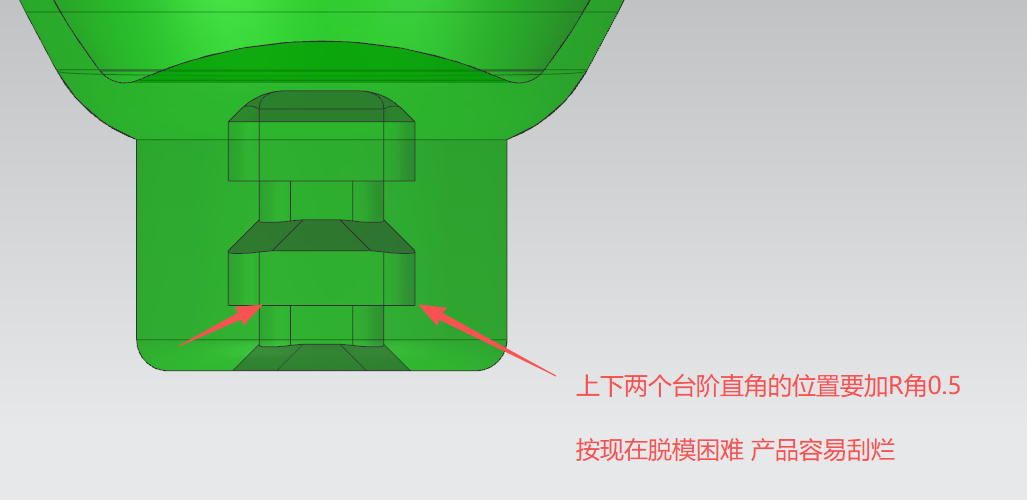
- R0.5 step radii were introduced to soften local transition stress and improve material flow continuity.
- Split ejection was used to reduce concentrated release load on one side of the part.
- Four slide-core groups were added to control local undercut release and reduce mold-sticking risk on the ring geometry.
From an engineering standpoint, these details were the real foundation for making the primer-free route repeatable. Without them, bonding success at sample level would still be vulnerable to mass-production damage or unstable release.
Process and validation focus
The case was built around a solvent-free route aligned with FDA, RoHS and PAHs food-contact programs, while also reducing the handling chain by removing primer, cleaning and drying steps.
Validation in this case focused on whether the bonded structure remained intact after repeated bending and thermal cycling, and whether peel behavior failed in the silicone body rather than at the silicone-to-PC interface. The supplied project note also records unit-cost reduction above 20 percent in the referenced setup and yield above 96 percent after the DFM route was stabilized.
Application transfer path
Baby-care and infant accessories
The route can be transferred to teethers, soothing handles, feeding accessories and care heads that need soft-touch silicone, a rigid internal frame and a cleaner exterior transition.
In this direction, the engineering value is not only adhesion itself, but also the ability to reduce glue-related residue paths and hold the bonded structure through washing and sterilization use conditions.
Adult personal-care and wellness accessories
The same route can also be transferred to intimate-rinse accessories, massage tools and silicone beauty heads that need a wrapped curved surface, wash resistance and a softer outer touch.
Here the main engineering gain is a more integrated soft-hard interface with fewer visible bonding traces, while lowering the risk of peeling, edge discomfort or water-ingress complaints during repeated use.
Engineering support provided in the case
| Support area | What the case included |
|---|---|
| Front-end DFM | Demolding, wall-thickness and bonding-risk review before tooling. |
| Tooling | Custom precision mold with multi-cavity layout and combined slide/ejection structure. |
| Material route | Primer-free self-bonding LSR in the 20 to 70 shore range according to project direction. |
| Production | Automated molding plus standardized inspection and shipment release. |
| Documentation | Material safety package supporting domestic and export certification work. |
Engineering takeaway
For small LSR + PC composite parts, the engineering question is usually not whether bonding can be demonstrated once, but whether the route can survive insert control, demolding, appearance review and multi-cavity production together. This case shows that primer-free bonding became practical only after the geometry, ejection logic, slide-core structure and process path were solved as one system.
Need a similar LSR + PC bonding review?
Send the drawing, target hardness, surface requirement, output target and market-compliance requirement first. PRESIS can review whether primer-free in-mold bonding is suitable for the project.
Open the RFQ entry