
Robotics · LSR + PC
Humanoid Robot Finger Joint | High-Clarity LSR + PC Overmolding
A transparent LSR outer layer over a rigid PC frame: a soft–rigid finger-joint component for humanoid dexterous hands.
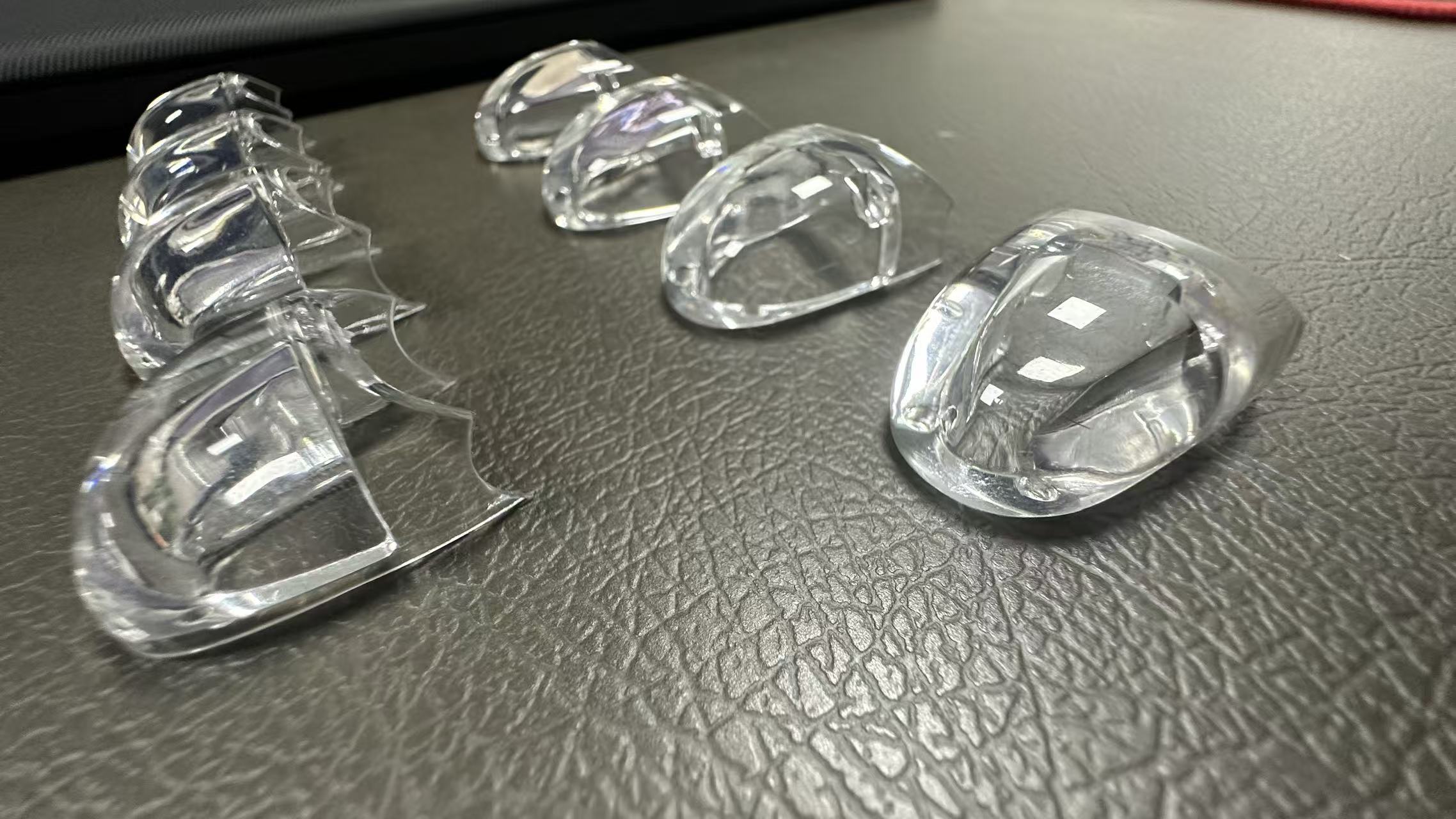
01 / Component structure
The component combines a flexible liquid silicone rubber (LSR) outer layer with an internal polycarbonate (PC) support frame. The design pairs a compliant contact surface with structural support for a humanoid robot finger joint.
02 / Molding challenges
LSR-to-PC interface adhesion, insert positioning and uniform filling are key controls. Development focuses on reducing delamination, bubbles, shrinkage marks, haze and visible flow or weld lines, while balancing transparency and dimensional stability.
03 / PRESIS process approach
The supplied project brief specifies a cold-runner LSR mold, controlled temperatures, filling analysis and clean production conditions. The development route covers requirement review, DFM, material pairing, mold design, trial molding and sample approval before production release. Exact grades, bonding treatment and process settings depend on the approved project specification.
04 / Sample acceptance
Confirm appearance samples, viewing conditions, interface adhesion criteria, dimensions and the bending test method with the customer. Light transmittance, hardness, bend angle and cycle life require sample-specific test results; no numerical performance or zero-defect guarantee is claimed here.
05 / Application direction
Development applications include humanoid dexterous hands, biomimetic grippers and flexible end effectors for research robots. Integration suitability depends on the actual loads, motion envelope and operating environment.
Updated: 12 September 2026
What does LSR + PC overmolding mean?
Liquid silicone rubber is molded around a PC insert to combine a flexible outer surface and a rigid support structure in one component.
Does a clear appearance prove optical-grade performance?
No. The photograph shows appearance only. Optical-grade claims require the selected material documentation and agreed optical testing of the molded component.
What should be provided for an engineering review?
Provide 2D/3D drawings, PC grade, silicone requirements, coating thickness, appearance criteria, motion and load conditions, test requirements and estimated quantities.